

Supplier Evaluation: Tips, Techniques, and Key Steps for Optimal Results
Supplier evaluation is one of the most important pillars of any company’s procurement process. Before finalizing an agreement or entering into a business relationship, it is essential to thoroughly analyze the factors that will determine the success or failure of the partnership. An unsuitable supplier can lead to cost overruns, non-compliance, a decline in quality, or even reputational damage. For this reason, organizations that strive for excellence in their operations implement systematic, technology-supported evaluation methodologies.
Today, companies that have incorporated digitalization into their procurement processes have SRM (Supplier Relationship Management) tools capable of centralizing all information, measuring supplier performance, and maintaining traceability of business relationships. But beyond technology, success depends on establishing clear, objective, and sustainable criteria.
Why It’s Essential to Evaluate Vendors Before Hiring Them
Evaluating suppliers before contracting them is not only a best practice but a strategic necessity. Companies that implement formal evaluation processes are able to improve efficiency, reduce costs, and increase the resilience of their supply chain. Furthermore, in a globalized and digital environment where competition is fierce and margins are shrinking, having reliable partners is an undeniable competitive advantage.
According to a Deloitte study (2024), 65% of supply disruptions in Europe are due to insufficient supplier evaluation. In contrast, companies with systematized analysis models are able to reduce incident response times by 20% and procurement costs by 15%. Evaluation, therefore, is not just about control—it is a tool for continuous improvement that directly impacts results.
Next, we explore the most important criteria to consider when evaluating and selecting suppliers, as well as the most effective techniques for implementing a structured, results-oriented process.
Key Criteria for Supplier Evaluation
1. Quality of the product or service
Quality is the foundation of any business relationship. A supplier must demonstrate the ability to meet the company’s standards and maintain that level of quality over time. A lack of control in this area can result in returns, warranty costs, or even the loss of end customers.
Modern evaluation systems make it possible to establish measurable quality indicators —defect rates, compliance with specifications, audit results—and automate their monitoring. In addition, conducting periodic audits ensures that the supplier remains committed to continuous improvement and innovation.
2. Compliance with Technical Requirements
Another key factor is the supplier’s technical capability. Does the supplier have the necessary equipment, resources, and expertise to meet the project specifications? Does it hold recognized certifications or comply with recognized standards (ISO, CE, TÜV, etc.)? Evaluating the supplier’s infrastructure, processes, and prior experience is essential to ensure it can handle spikes in demand or changes in requirements.
A technically competent supplier reduces the risk of failures and facilitates the implementation of joint improvement solutions. This aspect is also key for industrial or technological projects, where precision and regulatory compliance are non-negotiable.
3. Trust and Reputation
Beyond the technical details, trust is the foundation of any business relationship. Analyzing a supplier’s market reputation, references, and track record of compliance is essential to avoiding surprises. Platforms like itbid allow you to gather reviews from other buyers, review a supplier’s background, and verify certifications, creating a collaborative and transparent environment.
A reputable supplier provides stability and reduces the need for constant oversight. In addition, working with well-known companies can improve how your brand is perceived by customers and strategic partners.
4. Financial Stability
Assessing a supplier’s financial stability is crucial to preventing disruptions in the supply chain. A partner facing financial difficulties may fail to meet delivery deadlines or exit the market unexpectedly. Analyzing balance sheets, liquidity ratios, debt levels, and bank references is part of a comprehensive risk assessment.
SRM systems allow companies to track this information and generate automatic alerts when significant changes in financial indicators are detected. This enables the company to plan ahead and diversify its supplier network before any impact occurs.
5. Regulatory and Ethical Compliance
Responsible procurement is now a market requirement. Evaluating suppliers involves verifying that they operate within legal frameworks and comply with quality, safety, environmental, and labor rights standards. Sustainability is no longer just an added value, but a top selection criterion.
Leading companies require their suppliers to have policies in place regarding compliance, social responsibility, and the traceability of raw materials. At itbid, for example, purchasing departments can include these criteria in approval forms and automate document verification.
6. Continuous Improvement
The relationship with the supplier does not end with the signing of the contract. A periodic performance evaluation makes it possible to measure improvements in quality, timeliness, and competitiveness, fostering continuous improvement. This approach not only enhances the supplier’s performance but also strengthens long-term collaboration.
Implementing a monitoring system based on comparable metrics—service KPIs, turnaround times, resolved incidents, internal satisfaction—turns evaluation into a dynamic process rather than a one-time task.
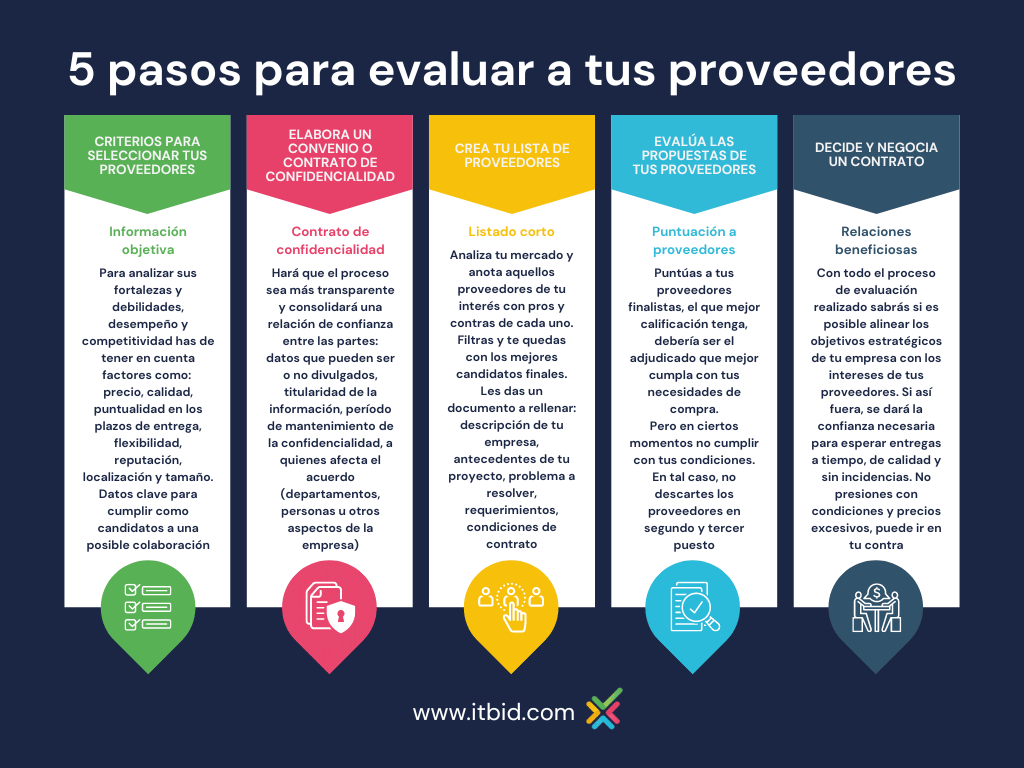
The 5 Essential Steps in Vendor Evaluation
Effective evaluation requires a methodology. The following describes the five most important steps to ensure that hiring decisions are based on objective information and aligned with the company’s goals.
1. Criteria for Selecting Your Suppliers
In this first stage, the evaluation criteria that will determine whether a supplier is suitable are defined. The most common criteria are price, quality, delivery times, flexibility, reputation, location, and responsiveness. Each company must weigh these criteria based on its business model and strategic priorities.
Establishing an evaluation matrix with objective scores (for example, on a scale of 1 to 10) helps ensure that suppliers are compared fairly and transparently. The best SRM systems automate this process, calculating overall scores and generating visual reports to facilitate decision-making.
2. Draft a confidentiality agreement or contract
Trust is built on transparency. Before exchanging sensitive information or technical data, it is essential to sign a non-disclosure agreement (NDA) that sets the limits on the use of the information. This document specifies what data can be shared, who will have access to it, and how long it will be protected.
In addition, the contract must include provisions regarding intellectual property, penalties for improper disclosure, and termination conditions. A solid legal framework provides peace of mind for both parties and promotes open communication throughout the evaluation process.
3. Create your list of suppliers
The next step is to identify the pool of potential partners. Analyze the market, gather information on specialized companies, and create a database of their key characteristics: experience, size, references, and responsiveness.
Next, filter out those who do not meet the minimum requirements and select the most promising candidates. On platforms such as itbid, this step can be automated by sending requests for information (RFIs) and managing the receipt of responses in a centralized environment.
4. Evaluate your suppliers’ proposals
Once the proposals have been collected, it’s time to analyze them in depth. Evaluate compliance with the specifications, deadlines, total costs, and added value. Create a scoring system that reflects the previously defined criteria and determines an objective ranking.
The supplier with the lowest price isn’t always the best choice. Often, reliability, innovation, or sustainability carry more weight in the final decision. For this reason, it’s recommended to keep a list of the three highest-rated suppliers, which allows you to respond quickly to any issues or changes in conditions.
5. Decide on and negotiate a contract
The process concludes with the negotiation and formalization of the contract. At this stage, all the necessary information is already available to ensure that the company’s strategic objectives align with the supplier’s capabilities. The negotiation should seek to strike a balance between both parties, fostering a long-term relationship based on trust and mutual benefit.
Avoid imposing excessive conditions or pressuring suppliers with unworkable margins. A supplier who perceives the relationship as fair will be more committed to quality and deadlines. With digital procurement systems like itbid, this step can be completed entirely online, with electronic approvals, document traceability, and automated monitoring of contractual milestones.
Comparison Table of Evaluation Factors
| Evaluation Factor | What to Analyze | Impact on the decision |
|---|---|---|
| Product or Service Quality | Compliance with specifications, defects, audits. | Ensures satisfaction and reduces complaints. |
| Technical Compliance | Certifications, production capacity, innovation. | Prevents technical non-compliance and rework. |
| Reputation and Trust | References, track record of compliance, reviews. | Reinforces the reliability of the supply. |
| Financial Stability | Financial ratios, solvency, length of operation. | Reduces the risk of service interruptions. |
| Regulatory Compliance | Regulation, ESG, social responsibility, legal compliance. | Protects the corporate image and ensures compliance. |
Optimize supplier evaluation with itbid
The itbid collaborative platform streamlines the entire process of evaluating, qualifying, and monitoring suppliers within a single digital environment. From the initial request to the signing of the contract, it offers complete traceability, comparative metrics, and analytical tools that enable data-driven decision-making.
In addition, its SRM approach makes it possible to automate periodic evaluations, rate each supplier’s performance, and generate visual compliance reports. In this way, procurement departments not only select suppliers but also build strategic, sustainable, and high-performing networks.
Request a demo and discover how to digitize the supplier evaluation and qualification process with itbid, increasing transparency, collaboration, and efficiency with every purchase.