

Supplier management is key, as suppliers are strategic partners who influence quality, costs, and the supply chain.
In a competitive and globalized business environment, effective supplier management offers significant advantages and aligns with the company’s objectives.
How?
Identifying and monitoring a set of key performance indicators (the well-known KPIs).
We know that you may not have the resources right now to invest in a tool like our collaborative supplier and procurement management platform.
But you can start step by step, by getting organized, implementing monitoring systems to detect critical failures, gaining greater clarity, and improving both quantitative and qualitative assessments.
Because taking corrective action in a timely manner can make a big difference.
So, let’s start at the beginning:
KPIs are quantifiable metrics that make it possible to evaluate the performance of a specific process or activity.
In the context of supplier management, KPIs provide:
- a clear and objective view of the status of relationships with suppliers,
- the quality of the products or services received and
- compliance with contractual agreements.
KPIs you should be concerned about as a buyer or purchasing manager in supplier management:
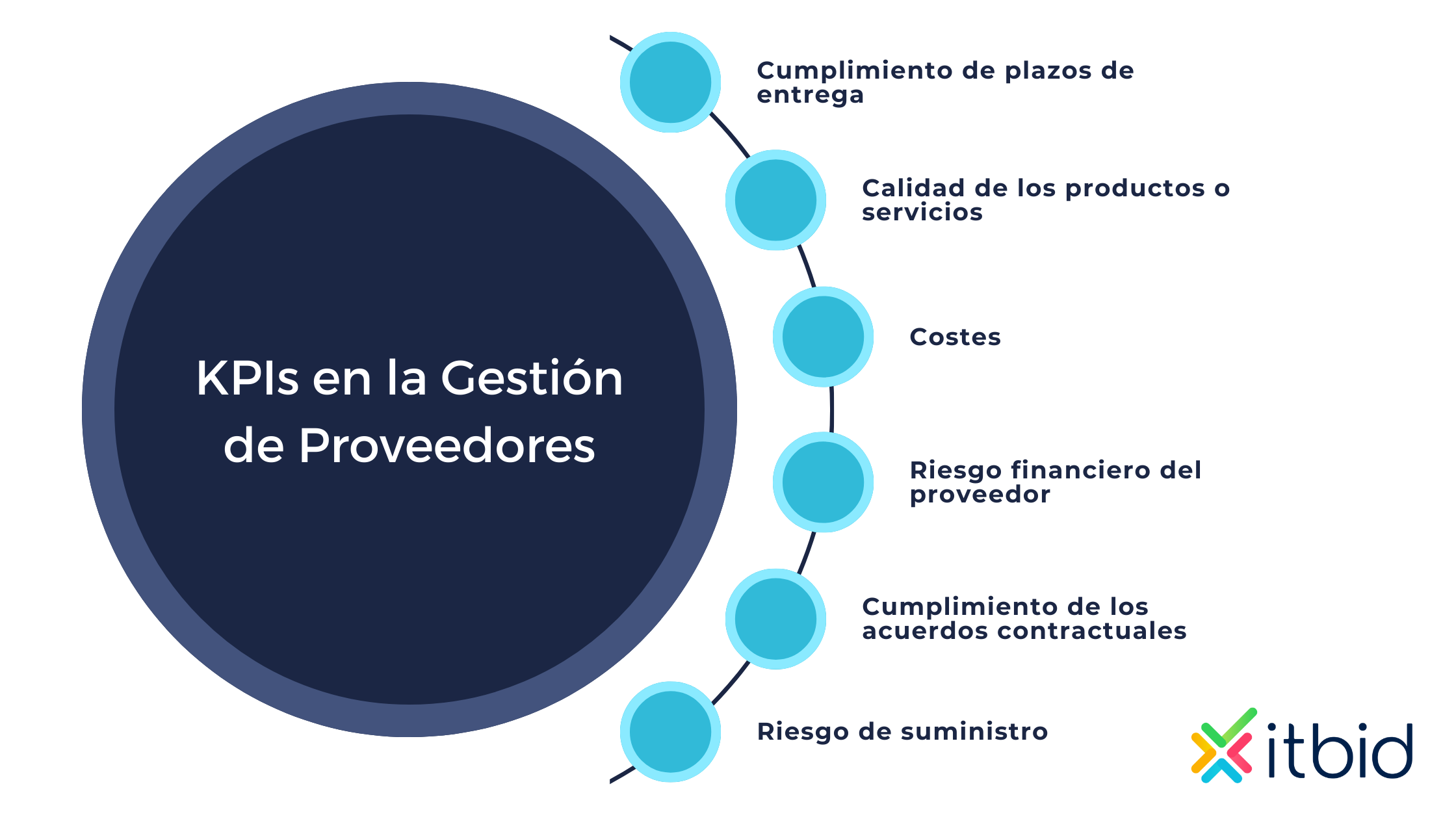
Meeting Delivery Deadlines
KPI: Percentage of on-time deliveries.
Alert: A low percentage indicates problems with supply chain planning and execution, which can lead to production delays and affect customer satisfaction.
Quality of products or services
KPIs: Defect rate, return rate, customer satisfaction survey results.
Warning: An increase in the defect rate or a decline in customer satisfaction may indicate quality issues with the products or services provided by suppliers.
Costs
KPIs: budget variance or savings achieved.
Warning: Significant deviations from the budget or an increase in the total cost of ownership may indicate problems with negotiations, a lack of cost control, or changes in market conditions.
Supplier Financial Risk
KPIs: Key financial indicators for the supplier (profitability, liquidity, debt).
Warning: A decline in the supplier’s financial performance may increase the risk of contract default or supply disruption.
Compliance with Contractual Agreements
KPIs: Rate of compliance with contract terms or number of breaches.
Warning: Frequent breaches of contractual agreements can lead to legal disputes, financial losses, and damage to the relationship with the supplier.
Supply Risk
KPIs: Number of critical suppliers, concentration of the supplier base, supplier responsiveness to disruptions.
Warning: A high concentration of suppliers or a low ability to respond to disruptions can increase the vulnerability of the supply chain.
And once you’ve identified the KPIs you’re going to monitor, it’s time to:
- Define evaluation criteria to rank your suppliers from lowest to highest risk.
- Look for alternatives to anything that could jeopardize your supply chain.
- Review and update these lists periodically.
Supplier management is a complex task that requires constant attention, and KPIs are essential metrics for evaluating supplier performance and making informed and TIMELY decisions.
A collaborative platform—or SaaS supplier management software —automates many of your day-to-day processes, from selection and hiring to performance evaluation.
By continuously collecting data, it provides you with tools and features that make it easier to identify and track the most relevant KPIs:
Custom dashboards:
View the most important KPIs in real time.
Automatic alerts and notifications:
Customizable notifications to detect when established thresholds are exceeded.
Predictive analytics:
Identifying trends and patterns that may indicate future problems.
Expert support:
Personalized guidance from procurement professionals on selecting the appropriate KPIs and interpreting the results.
By using SaaS software with expert support, companies can significantly improve the efficiency and effectiveness of their supplier management, reducing costs, minimizing risks, and ensuring supply continuity.