


Roles of the Procurement Department: The Evolution Toward Smart Management by 2025
The procurement department plays a decisive role in a company’s efficiency, profitability, and sustainability. Its responsibilities extend far beyond simply purchasing products or services: they include strategic supplier management, cost optimization, technological innovation, and a direct contribution to corporate value.
In this article, we analyze the key functions of the procurement department, the trends that will shape its evolution in 2025–2026, and the impact it has on the professional development of modern procurement managers.
The Purchasing Department as a Strategic Pillar
Historically, procurement was considered an operational function, but today it is a strategic pillar within the organization. Decisions made in this area directly impact the company’s competitiveness, sustainability, and capacity for innovation.
The main functions of the purchasing department include:
| Function | Strategic Objective | Expected Benefit |
|---|---|---|
| Supplier Selection and Evaluation | Identify reliable, sustainable business partners that are aligned with the company’s strategy. | Risk reduction, consistent quality, and long-lasting relationships. |
| Inventory and Supply Management | Ensuring availability without overstocking. | Capital optimization and operational continuity. |
| Cost Optimization | Reduce the total cost of ownership without compromising quality. | Greater profitability and financial efficiency. |
| Contract Management and Regulatory Compliance | Ensuring transparency and traceability in procurement processes. | Legal compliance and reduction of reputational risks. |
| Strategic Analysis and Reporting | Turning data into smart decisions. | Greater control over spending and evidence-based planning. |
Current and Future Trends in the Purchasing Department
In 2025 and 2026, the role of the procurement department will evolve toward smart, sustainable, and digitized management. Below, we explore the key trends that will shape this transformation:
1. Digitization and Automation
The adoption of technologies such as artificial intelligence (AI), e-procurement, and supplier relationship management (SRM) platforms is revolutionizing procurement processes. These tools make it possible to automate approval workflows, reduce manual errors, and provide full visibility into the supply chain.
- Automation of purchase orders and approvals.
- Integration with ERP systems and predictive analytics.
- Up to a 35% reduction in cycle times, according to Gartner (2025).
2. Sustainability and Social Responsibility
Companies of the future prioritize responsible purchasing. This means incorporating ESG (environmental, social, and governance) criteria into purchasing decisions and fostering relationships with ethical and sustainable suppliers.
- Environmental Impact Assessment and Carbon Footprint.
- ISO 14001, 20400, and 26000 certifications as the benchmark standard.
- Increased trust and reputation among customers and investors.
3. Risk Management and Supply Chain Resilience
Recent global events—pandemics, geopolitical tensions, and logistics crises—have demonstrated the importance of having robust mitigation strategies in place. The procurement department must anticipate vulnerabilities and diversify its supplier base.
- Assessment of geographic and financial dependence.
- Contingency and Business Continuity Plans (ISO 22301).
- Using AI to detect disruptions before they impact operations.
4. Data-Driven Procurement (Data Procurement)
Advanced analytics is changing the way decisions are made. Smart dashboards allow you to monitor KPIs in real time, identify spending trends, and pinpoint savings opportunities with precision.
- Expenditure breakdown by category, supplier, and region.
- Price forecasting and budget optimization.
- Continuous improvement based on verified metrics.
5. Collaboration and Transparency
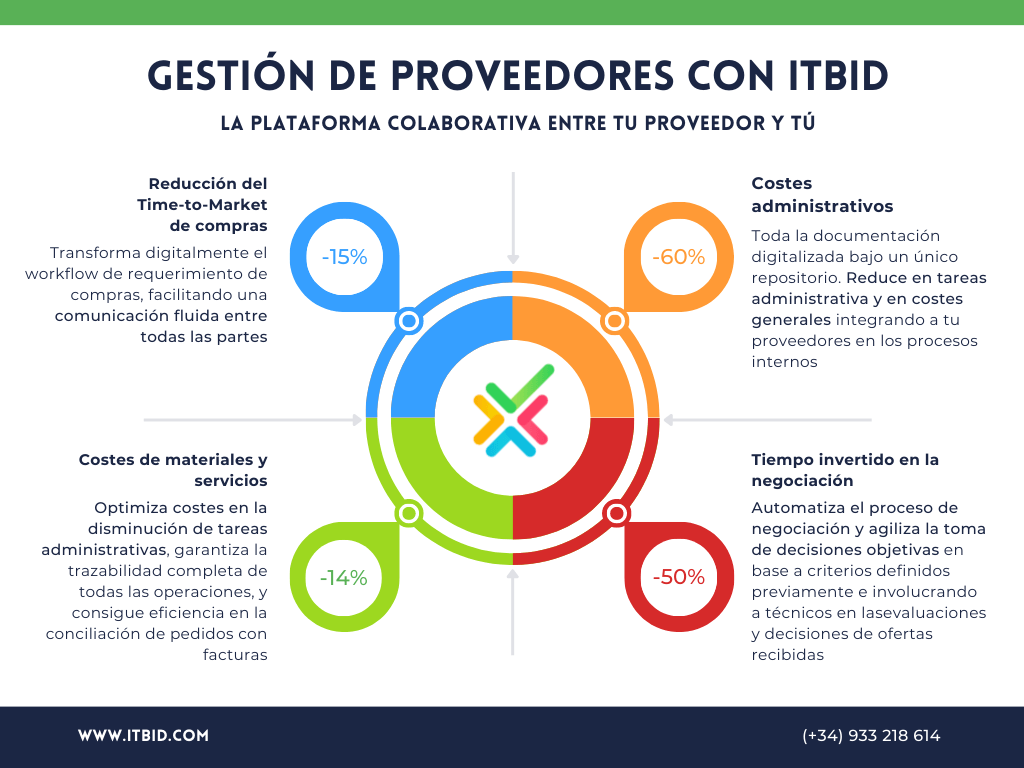
The future of procurement will be collaborative. SRM platforms and supplier portals such as itbid foster an open and traceable relationship among all stakeholders in the process, from the request for proposals to post-delivery evaluation.
- Centralized, two-way communication.
- Automated audits and digital transaction logging.
- Better alignment with the company’s strategic objectives.
Impact on the Professional Development of the Purchasing Manager
The role of the procurement manager has evolved from an administrative one to an analytical, digital, and strategic one. By 2025, procurement professionals must be proficient in using technology tools, understand ESG dynamics, and lead high-impact collaborative processes.
The most highly valued skills include:
- Analytical skills and data proficiency.
- Advanced Risk Management and Sustainability.
- Knowledge of digital procurement platforms.
- Strategic, value-based negotiation.
This paradigm shift transforms the procurement department into a true hub of innovation and profitability within the organization.
Optimize your purchasing department with itbid
In a world where efficiency and sustainability are essential, itbid offers the technology you need to transform your procurement management. Its collaborative supplier platform allows you to digitize processes, improve traceability, and make more informed decisions.
- Automated supplier classification.
- ESG Performance and Compliance Assessment.
- Centralized and secure document management.
- Advanced analytics with customizable KPIs.
Contact us and find out how itbid can help you professionalize your procurement department, reduce costs, and strengthen your relationships with strategic suppliers.
Request a demo and take your procurement management to the next level of digitization and performance.